Valent was not designed as a standalone showpiece. It is a field device that gives the building's invisible climate-control system a physical point of measurement.

Valent / Enko
A small, legible sensor for much larger systems.
Designed for Enko, Valent is a compact field sensor for ventilation and indoor-air-quality automation. Its cellular upper shell and red service panel bring technological character together with assembly logic.
IAQindoor-air-quality and environmental-data context
HVACfield connection to building automation
CADenclosure, mounting and internal-layout decisions
360°part architecture designed to read from every side
Project DNA
The task was not to make a sensor box look futuristic. It was to make its role in the system legible.
Valent's product language brings measurement, installation, service and brand character into one compact object. The technological expression on the surface was always evaluated together with part boundaries, access zones and the device's physical role inside a building.
The long probe reaches into the air stream while the main enclosure remains accessible, separating the measurement point from the part a technician needs to reach.
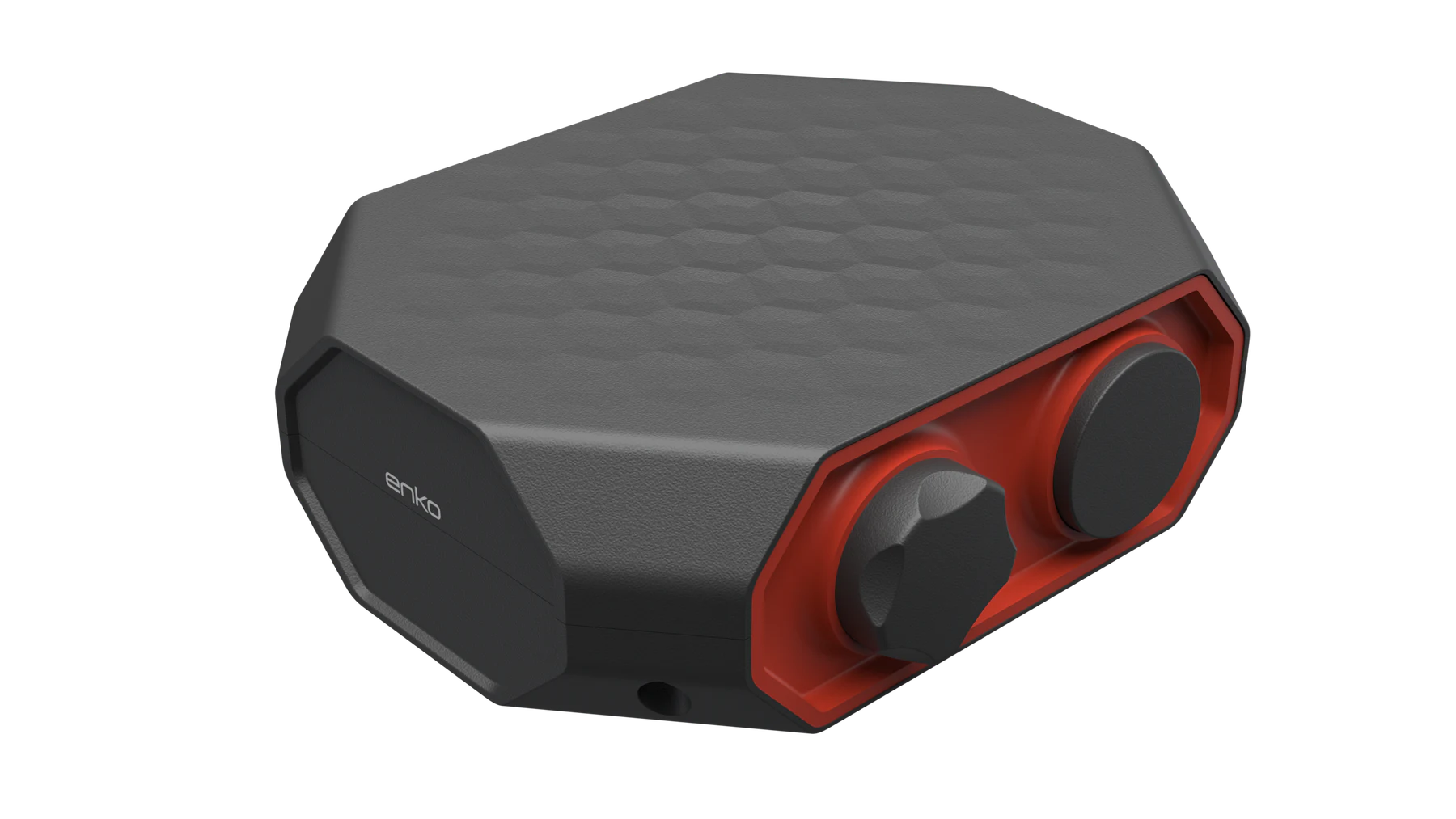
A divided cellular texture turns Enko's technology domain into a physical surface language, adding digital character without treating the shell as decoration.
The red front panel separates access, connection and control elements from the graphite body so the service-facing area reads immediately.
Upper and lower shells, service panel, fasteners, ribs and bosses are organized inside one compact volume so the intended assembly remains legible.
Graphite surfaces, controlled facets and one decisive accent color position Valent as a contemporary field device without making it look like consumer electronics.
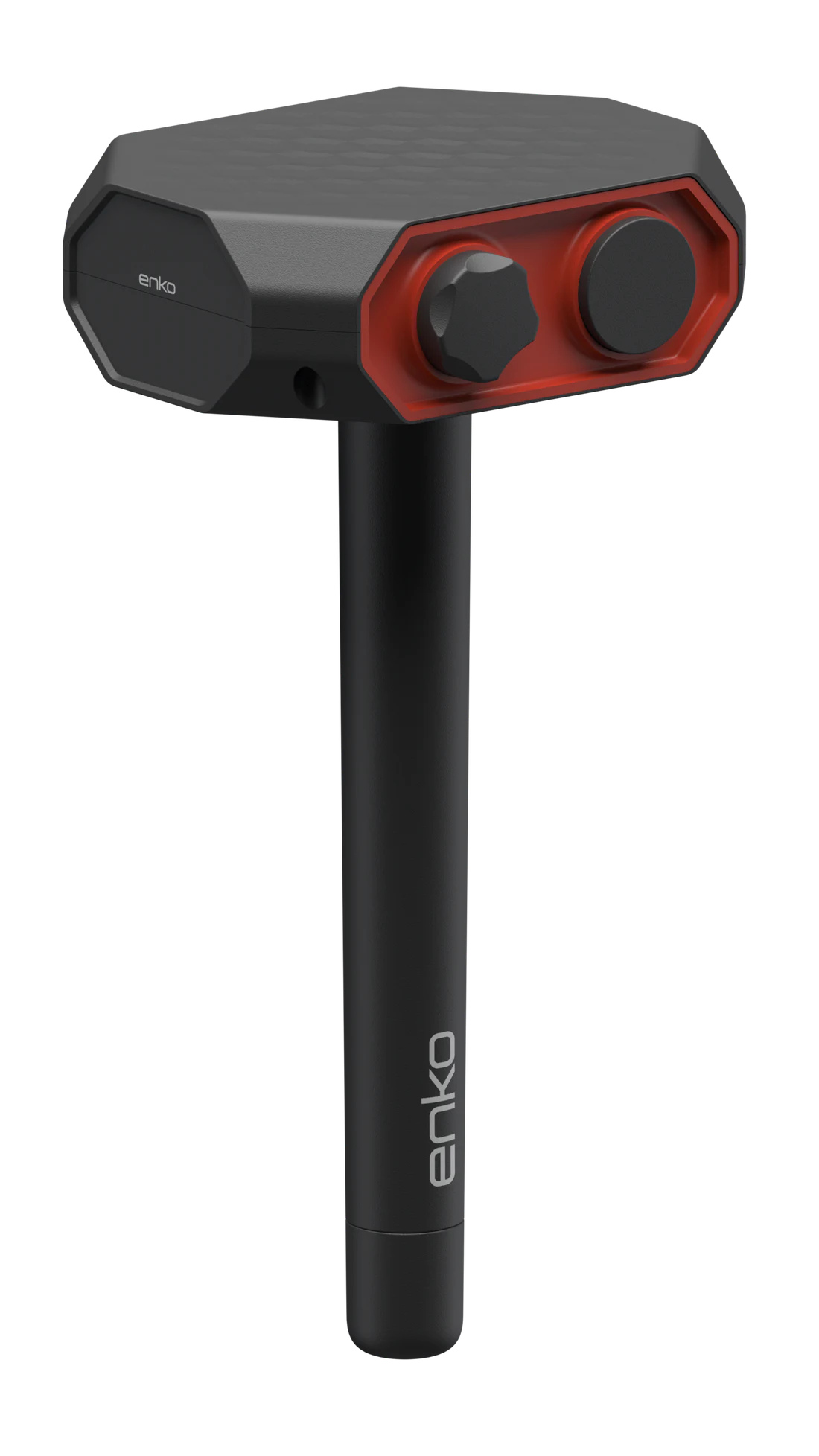
01 / Field Device
A small device doing a large job first needs to explain where it belongs.
Valent was developed as a compact sensor enclosure for environmental data in ventilation and indoor-air-quality automation. The ratio between the long probe and the main body makes it clear that this is not simply a box: it is a measurement tool that physically reaches into the air stream.
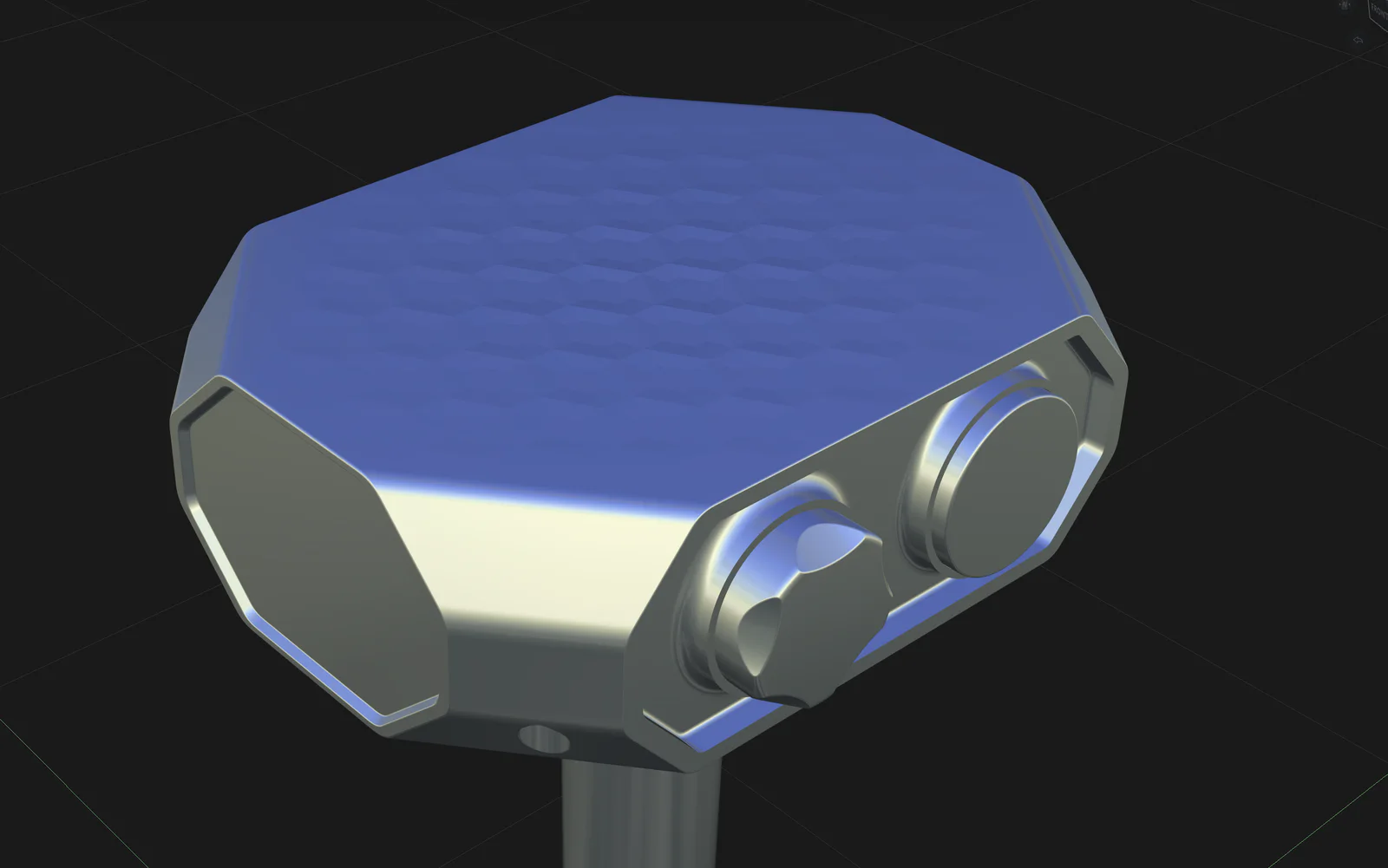
02 / Surface Decision
The sense of technology came from an ordered field, not arbitrary detail.
Enko's technical identity in sensors and automation was translated into a controlled cellular texture on the upper surface. The field follows the main form: calm from a distance, more layered up close, with a subtle reference to data and connected systems.
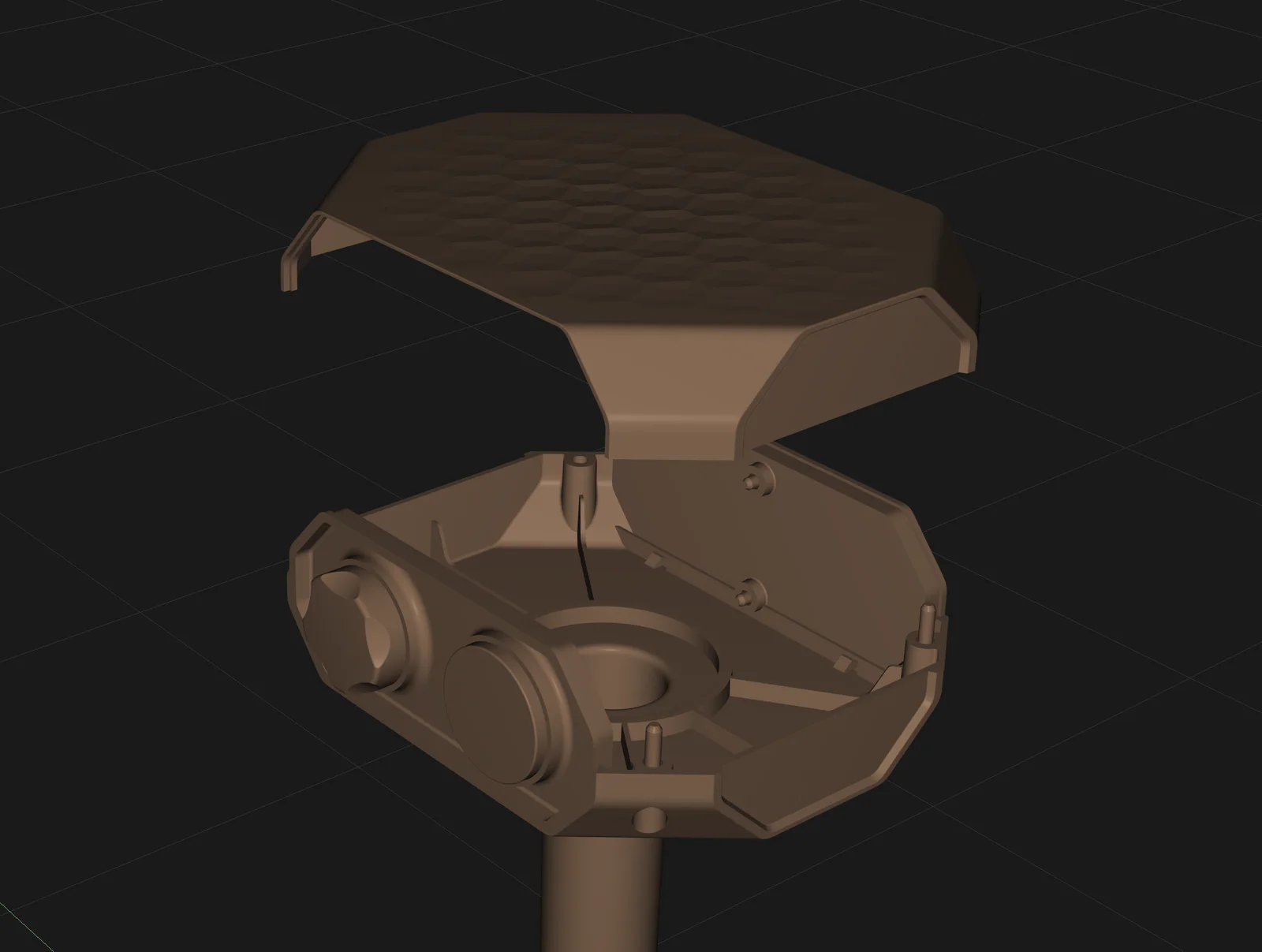
03 / Enclosure Architecture
External character and internal assembly were tied to the same geometry.
Shell splits, probe transition, front service zone and internal connection points were developed as one enclosure system. The goal was not only a technological appearance, but a credible product architecture in which cover, internal volume and access direction support one another.
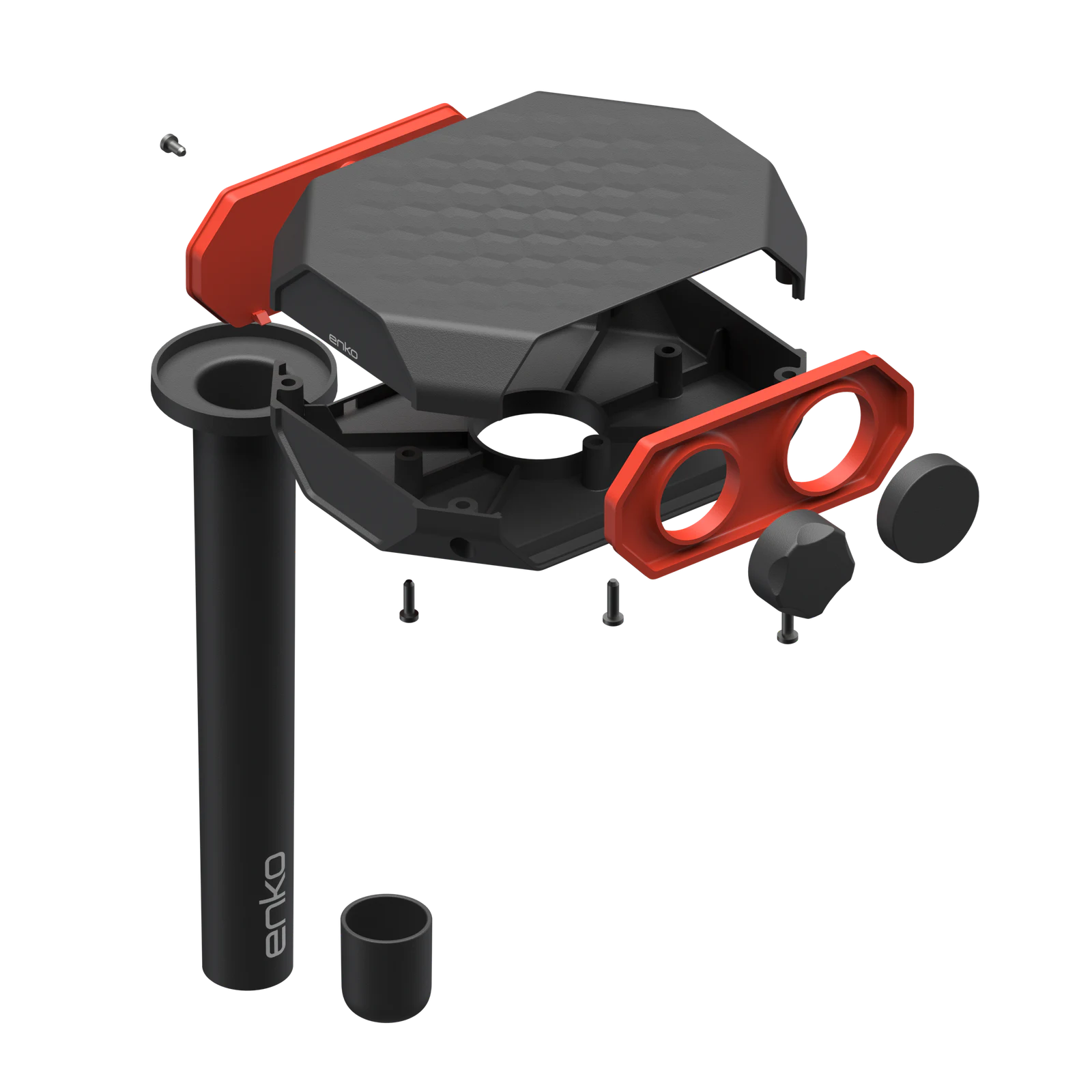
04 / Part System
The exploded view made the assembly intent behind the form visible.
Upper and lower bodies, red service panel, controls, probe and fasteners each carry a clear role. The exploded presentation shows that Valent is not a single rendered volume, but a coordinated family of parts shaped around access and assembly.
Design Evidence
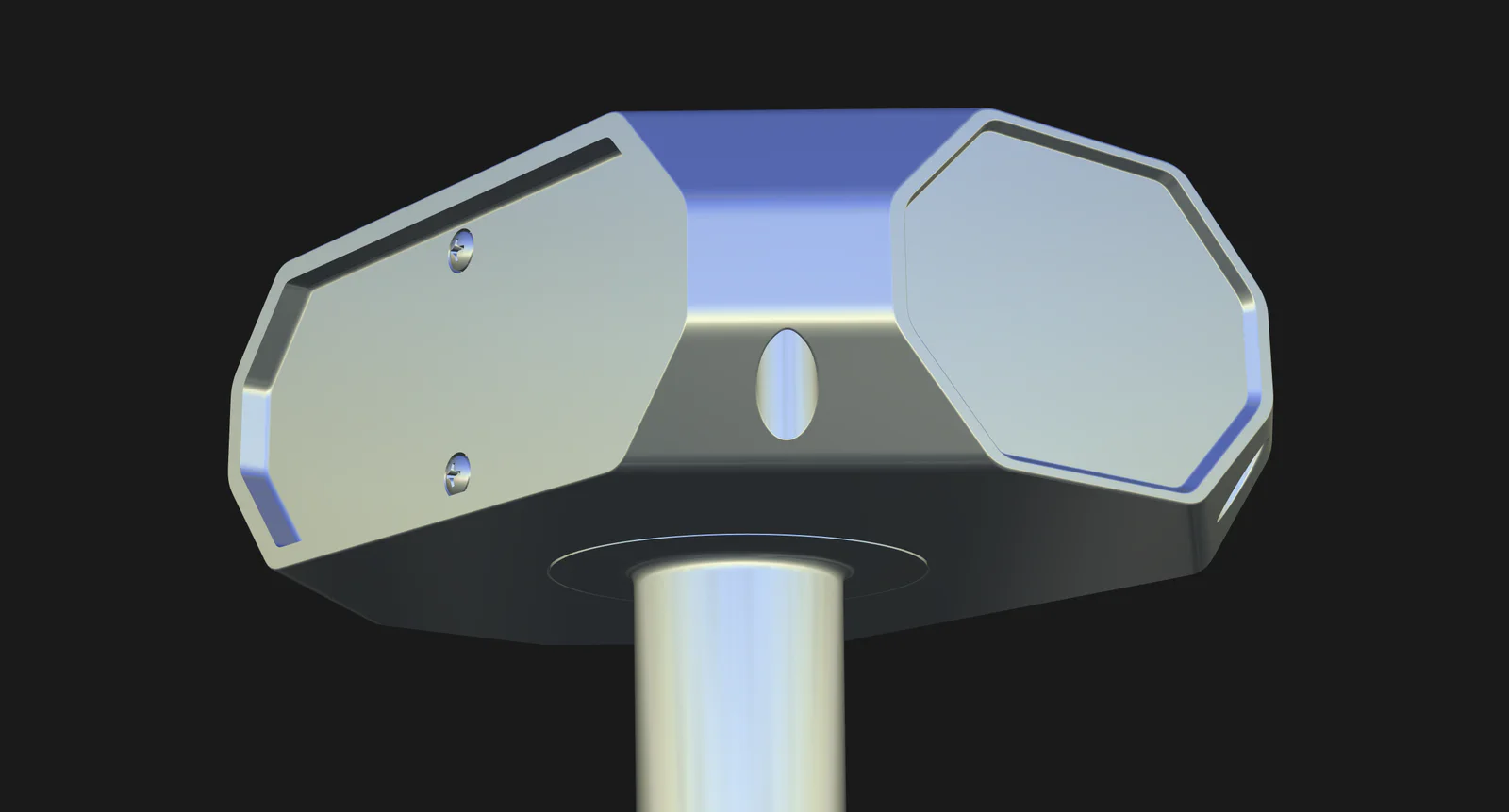
Technological character is carried by the underside and service direction as much as the visible shell.
The close product render communicates character, while the CAD views expose the probe transition, underside and connection zones. Together they show form and enclosure intent working as one product.
This case study focuses on the visible design, CAD and presentation material. Sensor performance and final production specifications are outside the scope of this page.
Method Takeaway
A strong technical product does not explain the whole system. Its geometry quietly reveals the role it plays inside it.
Method Studio supports sensor, IoT, smart-building, electronics-enclosure and field-device projects from brief and form architecture through CAD development, surface decisions and presentation visuals.